– and a little about New York –
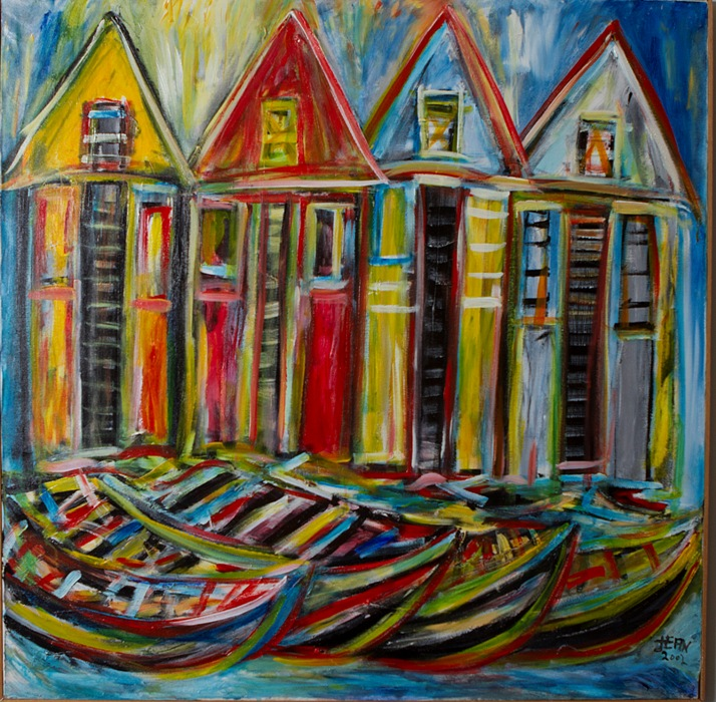
2002 – mixed media on canvas – 102.5 x 102.4 cm – Collection Central bank Curacao https://art.centralbank.cw/our-collection/jean-girigori
Just as there is much non-Hispanic in what used to be called Hispaniola, there is not much Dutch in the Dutch Caribbean. The use of adjectives and terms derived from metropolitan languages English, Spanish, French and Dutch for long dominated historiography relative to the Caribbean. This lens narrowed scopes, centering imperialism, nations and those in power and in sight in the archives of printed material – the traditional epicenter of historical research. In the case of the Dutch Caribbean islands, issues further arise because of the many geographical, ethnical and linguistic spaces within that political entity, resulting in a wide range of valid and urgent historical questions relative to senses of belonging and performative citizenship. It is in the context of this largely unchartered scholarly realm that I focus my study on regional connections and interactions.
In my work I have a primary interest in the lives, thoughts and actions of people in and from the Caribbean and how they moved beyond borders – whether geographical, cultural, ideological or intellectual. In recent centuries, a variety of groups and individuals operated and migrated between the islands. They can roughly be categorized as traders, investors, flexible laborers, contracted individuals, unfree humans and motivated individuals. My study will focus on twentieth century case studies. My claim relative to the ‘Dutchness’ mostly relates to these twentieth century individuals, such as migrant laborers in San Pedro de Macoris coming from the Dutch English-speaking Windward Islands such as St. Maarten. Nevertheless, to understand the world in which these twentieth century people moved begins with understanding early beginnings of Caribbean Connections and Dutch-Dominican Connections. In this blog I share some insights in the history of early interactions and migrations, ending with Juan Rodrigues, Wall Street and the birth of New York.
Early Beginnings
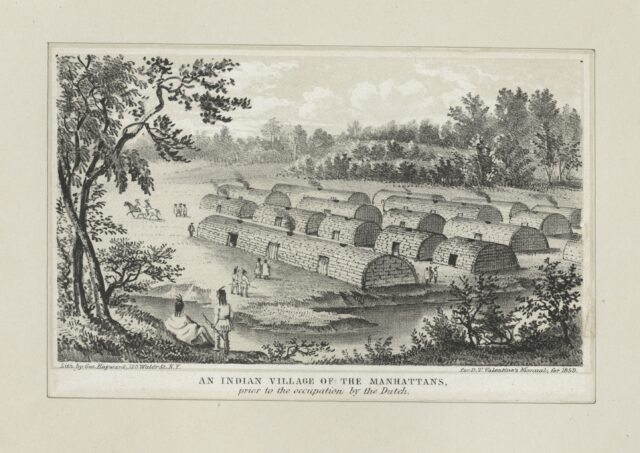
Long before Dutch and other European ships crossed the Atlantic, regional migration and communication of all sorts was elementary to the Taíno, Caquetío, Guanahatabey, Lucayo, Ciguayo, Carib, and Arawak peoples living on the islands and coastal areas of the Caribbean. Interaction between these spaces were influenced by personal and social as well as ideological and climatological factors. This resulted in a sustaining web in which people, products and ideas circulated, with long-distance communication taking place through sharing stories and a variety of cultural expressions.
The arrival of Europeans in the late 15th century would soon prove to be disastrous for indigenous lives, cultures and landscapes. European powers not only claimed land possession, they cruelly took hold of the people they encountered and drove whole populations from smaller islands to larger ones to work at plantations. This was also how by 1513 the Spanish occupation moved the majority of the Caquetío population from Curaçao to ‘La Española’ (Hayti), leaving only approximately 400 people behind.
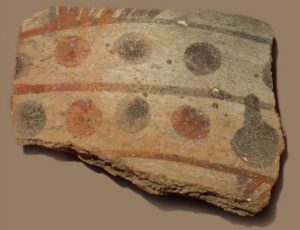
Source: https://www.curacaohistory.com/first-painted-ceramics-in-curacao
Early Dutch-Dominican connections
Dutch merchants arrived in the area in the late sixteenth century. They developed Atlantic trade relations and enterprises, and continued to do so against the background of a sequence of wars between European powers such as the Dutch and Spanish Kingdoms. Wim Klooster in The Dutch Moment (2016) records the story of the Fortuijn, sailing from Arnemuiden to Santo Domingo in 1593. Though the enterprise was Dutch, the pilot and many crew members were Spanish, a deliberate choice to cover up Dutch ownership. On the receiving end in Santo Domingo, arrangements were made locally with one of the most powerful men on the island to guarantee a successful business deal. Similar local arrangements were made around the turn of the sixteenth century to provide the Amsterdam leather industry with hides from Santo Domingo and Cuba, involving no less than 20 Dutch ships. Records also testify of early Dutch migrants on these islands, such as Hans van der Vucht, born in the city of Haarlem in the Netherlands, settling first in the town of Santo Domingo, then in Bayaha on the northern side of the island, before relocating to Amsterdam around 1590.
Cultural Brokers and New Migrants Experiences
Decades before the Dutch Republic in 1621 chartered the West Indian Company, or WIC, a functional network had already developed between individuals of all backgrounds, providing the new trading company with a ready contingent of cultural brokers. Recent studies of these early European-American encounters, such as Mark Meuwese’s Brothers in Arms (2012) and Wim Klooster’s The Dutch Moment (2016), rightfully emphasize the need of a more holistic perspective of ‘Dutch’ ventures in the Atlantic. Their studies richly illustrate how traders sailed between Africa, Caribbean islands, the Hudson area and Holland, often with crews of all backgrounds and nationalities. This resulted in the development eventually of new settlements, regimes and eventually nations, as well as in personal experiences of travel and migration well beyond known horizons.
A great testimony to an early migratory experience taking place in this Atlantic triangle is the story of Juan Rodriguez, a Black free man that arrived in the Hudson Harbor in 1613. Notary records held in the City Archives of Amsterdam, the Netherlands, tell that the crew of the Jonge Tobias, a Dutch Merchant ship active in the fur trade, included a black or mulatto free man “born in Saint Domingo”. Rodriguez decided not to continue as crewmember to Amsterdam, but to stay in the Hudson Bay area. Here he met again with his former Dutch captain a year later, in 1614, when a dispute arose and people got hurt, including Juan Rodriguez. The rest of that particular story is unknown.1 What is of interest is that this black man – moving free and sovereign in an Atlantic world ruled by foreign powers – already in 1613 chose to reside in the Hudson Bay. This was six years before the first African enslaved landed in Virginia (1619), and seven year before the Pilgrim Fathers set foot on Massachusetts’ shore (1620). In the early slavery Atlantic that would eventually shape into the interconnected world of Julius Scott’s Common Wind (2018), Juan Rodriguez seems to have been ‘a masterless class’ on his own.
Fast forward: from 1613 to 2023
Studying Dutch-Dominican relations obviously starts with looking into the origins of the Caribbean and the history of Caribbean Connections. New York again and again played a role in that. Forty years after the arrival of Juan Rodriguez, in 1653 a wall was built in what we now know as Wall Street to separate and protect the DutchWest Indian Company settlement in the south of Manhattan from attacks from the indigenous Lenape and free and unfree Blacks populating the island.
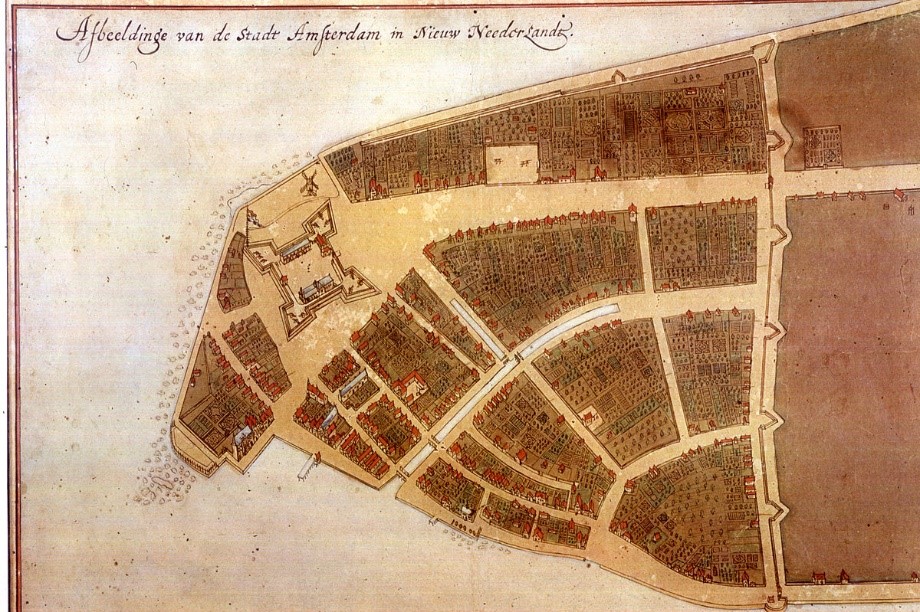
Source: Wikimedia Commons

In July 1667 the Dutch handed over the settlement, then called New Amsterdam, to the English in exchange for Surinam (or: Dutch Guyana, situated in between French and British Guyana). Though no longer a Dutch colony, New York would remain important for ‘Dutch’ Caribbean trade, shipping and migration well into the Twentieth Century.
In the coming weeks I will present the first results of my research in a series of guest lectures at the University of California, Irvine2, California Lutheran University3 and Pomona College. These are all onsite only. A hybrid event organized by the CUNY Graduate School Center for Latin American and Caribbean & Latino Studies is planned tentatively for April 25th, 2023, 6 pm EST. More on this in upcoming blogs.
1 Stevens-Acevedo, Anthony, Tom Weterings, and Leonor Francés. Juan Rodriguez and the Beginnings of New York City, 2013. https://academicworks.cuny.edu/dsi_pubs/17.https://academicworks.cuny.edu/cgi/viewcontent.cgi?article=1016&context=dsi_pubs
See also the DSI Library digital project which uses our resources to tell the story of Juan Rodriguez:
https://morrisjumel.org/stories/living-landscape/#expansion-and-diversification-of-uptown-1613-1865
3 https://www.callutheran.edu/calendar/event/5622/
4 https://www.gc.cuny.edu/center-latin-american-caribbean-latino-studies
Interessant Margo!
Dank je Marjanne!